News
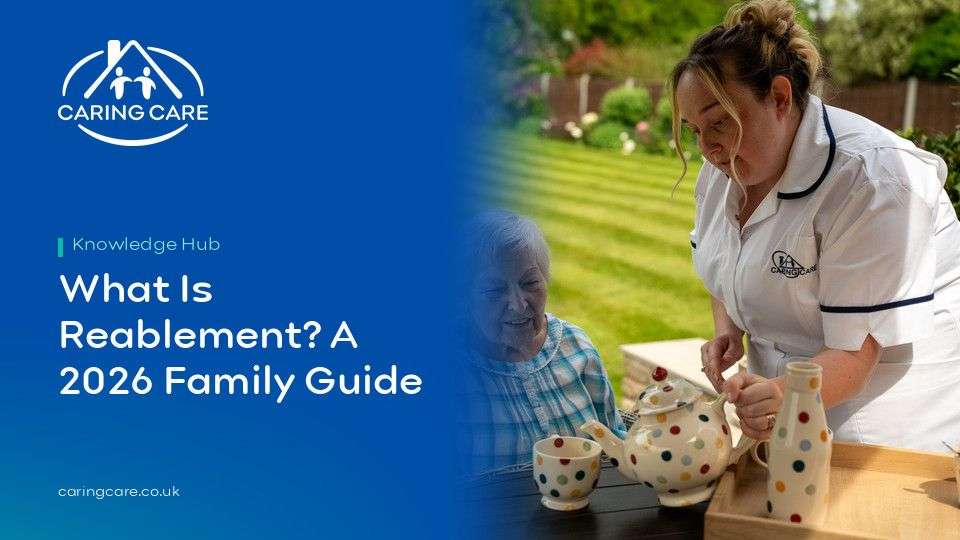
What Is Reablement? A 2026 Guide for West Midlands Families
Reablement is short-term support at home that helps someone relearn everyday tasks after an illness, a fall or a hospital stay. A reablement worker does things with the person, not for them, so they can wash, dress and make a meal on their own again. When the council provides it in England, the first six weeks are free.
This guide covers reablement in Wolverhampton, Walsall, Birmingham, Dudley, Sandwell and Staffordshire: who gets it, how it starts, what the six weeks look like, and what happens when it ends.
The short answer
Reablement is time-limited, goal-based help at home to regain skills and confidence. It often starts when someone leaves hospital, but a GP or the council can arrange it for someone already at home. Under the Care Act 2014 charging rules, council reablement must be free for the first six weeks, whatever the person's savings. At the end, there is a review. If care is still needed, the council looks at longer-term support and what the person pays.
What is reablement?
The government's Care and support statutory guidance describes reablement as services that help people live independently, provided in their own home by a team of mainly care and support professionals. It is one of four types of intermediate care, alongside crisis response, home-based intermediate care and bed-based care.
NICE guideline NG74, Intermediate care including reablement, defines it as assessment and support at home to help people recover skills and confidence and be as independent as possible. NICE says that for most people it lasts up to 6 weeks.
A reablement worker helps someone practise a task until they can do it themselves, then steps back. Dudley Council calls this a "doing with" approach.
The support can include:
- getting washed and dressed, or using the stairs
- preparing a simple meal or a hot drink safely
- exercises set by a physiotherapist or occupational therapist
- equipment such as grab rails or a perching stool, often on loan
- getting back out to the shops or a local group
Who gets reablement?
NICE says people should be assessed for intermediate care, including reablement, if support would help them live independently. That includes people who have been in hospital, are at risk of going in, or are finding daily life harder at home because of illness or disability. Walsall and Dudley councils offer it to adults aged 18 and over.
NICE also says reablement should be the first option for people being considered for home care, where it could improve their independence. It recommends considering reablement for people living with dementia, and says no one should be excluded because of a particular condition.
How reablement starts: hospital discharge and discharge to assess
Reablement often starts on a hospital ward. The NHS uses a model called discharge to assess. Under the government's hospital discharge and community support guidance, people go home once they are medically ready, then get short-term recovery support. Longer-term needs are assessed once they have recovered and are stable.
The guidance sets out four pathways. Pathway 0 is going home with no new care needs. Pathway 1 is going home with new or extra health or care needs, which is where reablement at home fits. Pathway 2 is a short recovery stay in a community bed, and pathway 3 is a care home. City of Wolverhampton Council says it follows a "home first" approach because for 95% of people, home is the right place to go.
Reablement can also start at home. The NHS says to speak to your GP surgery or the council after a fall, injury or illness. Our hospital discharge home care guide covers the ward stage in more detail.
Is reablement free?
Yes, for the first six weeks when the council provides it. Regulation 3 of The Care and Support (Charging and Assessment of Resources) Regulations 2014 says a council must not charge for intermediate care and reablement for the first 6 weeks. The Preventing Needs for Care and Support Regulations 2014 say the same for reablement offered as prevention.
The statutory guidance also says:
- The six free weeks apply to all adults, whether or not they have eligible needs for ongoing care.
- Reablement shouldn't have a strict time limit. How long it lasts should depend on the person's needs and progress.
- Councils can charge after six weeks, but should consider keeping it free where there is a clear benefit.
The NHS describes this as free care for as long as you need it, for example 1 or 2 weeks or longer, usually for a maximum of 6 weeks. Dudley Council says its service usually lasts three to four weeks.
What happens during reablement
It starts with an assessment of what the person can do and what matters to them. The team agrees goals with the person and family, then reviews them. The NHS says the team might include an occupational therapist, a physiotherapist, a speech and language therapist, a social worker, nurses, doctors and care workers.
Expect visits to change. Sandwell Council says its STAR team works with people for up to six weeks and reduces support as they make progress. That's the point. It can still feel sudden if you have got used to a carer arriving each morning.
Walsall Council says that in many cases the right equipment is enough for someone to stay independent without ongoing care.
What happens after six weeks of reablement?
NICE says ending the service needs a clear plan, agreed with the person and family, with contact details and a back-up plan. People should also be told how to refer themselves back in if their needs change.
If someone still needs help, the council carries out a Care Act needs assessment and, if they're eligible, a financial assessment to decide what they pay. A family carer is entitled to a carer's assessment too. Support after that can be arranged in one of four ways.
Council-funded care
In England, people with more than £23,250 in savings and assets normally pay for their own care for 2026 to 2027, according to the government's social care charging circular. Below that, the council works out a contribution. Ongoing council care is means tested, unlike the six reablement weeks.
Direct Payments
If the council assesses someone as needing care, GOV.UK says they can ask for Direct Payments, which let them choose and buy their own care instead of using the council's arrangements. Our Direct Payments guide for Birmingham families explains how it works.
Paying privately
Families above the capital limit, or who want more care than the council arranges, can book a provider directly. Our guides to the cost of home care in Walsall and the cost of home care in Wolverhampton explain what shapes a quote.
NHS Continuing Healthcare
If someone's needs are mainly health needs, the NHS may fund the whole package. Our NHS Continuing Healthcare guide explains the checklist and Fast Track. Attendance Allowance is worth checking too. It isn't means tested. The 2026 to 2027 weekly rates are £76.70 and £114.60, and our Attendance Allowance guide covers how to claim.
Reablement services across the West Midlands
Each council describes its service a little differently on its own website.
- Walsall Council runs Community reablement for adults after an illness, injury or a change in their situation. It says the service is free, not means tested, short-term and intensive, and does not replace support after a hospital discharge. Call adult social care on 0300 555 2922, or your GP can refer you.
- City of Wolverhampton Council has a Home Assisted Reablement Programme (HARP) for short-term reablement at home, and a Community Intermediate Care Team of nurses and therapists. Contact adult social care through the council's online form.
- Dudley Council runs a Reablement Service and STARS (Short Term Assessment and Reablement Service). It says intermediate care is free for up to six weeks, but usually three to four. Call Adults Front of House on 0300 555 0055.
- Sandwell Council's STAR service is free and runs from 7am to 11pm, 7 days a week, for up to 6 weeks. A health or social care professional usually refers you. Call Adult Social Care Connect on 0121 569 7474, option 4.
- Staffordshire County Council provides reablement through HomeFirst or Independence at Home. It says it is free while you're taking part, up to six weeks, and normal charges apply to ongoing care. Call Staffordshire Cares on 0300 111 8010.
- Birmingham City Council lists short-term support, sometimes called reablement, among its adult social care services. It says there is no charge for an assessment. Call 0121 303 1234.
What families can do
- Ask the ward which discharge pathway has been agreed, and who the reablement provider is.
- Write down the goals in plain words, such as making breakfast alone or getting to the bathroom at night.
- Ask what equipment is coming and when, so it's in place before the first visit.
- Ask the date of the final review and be there for it.
- If you think care will still be needed, ask for the Care Act assessment before reablement ends.
- Keep a short diary of what your mum or dad can and can't do each day, to take to the review.
How Caring Care supports families during and after reablement
We've worked with Walsall Council on its Community Reablement pilot, and in November 2025 we marked its first year. The main lessons were:
- Simple, measurable weekly goals work best.
- Consistent visits help routines stick and confidence grow.
- Plans need a quick review when something isn't working.
- Families who are involved keep progress going between visits.
We also support people whose reablement is coming to an end and who still need help, through hospital discharge care, home care visits and personal care.
We don't publish a price list, because two families in the same street can need very different care. Every family gets a written quote after a free care assessment.
We're CQC-rated and have been supporting West Midlands families since 2008. To talk through care after reablement, call us on 0330 056 3111 or visit our Walsall home care page or Wolverhampton home care page and ask for a free care assessment.
Frequently asked questions
What is reablement? Reablement is short-term support at home to help someone regain skills and confidence after an illness, injury or hospital stay. A worker helps the person do things for themselves, and NICE says it lasts up to 6 weeks for most people.
Is reablement free? Yes, for the first six weeks when the council provides it. The Care Act 2014 charging regulations say councils must not charge for reablement in that period, whatever someone's savings or income.
What happens when reablement ends? There is a review. If someone still needs care, the council carries out a needs assessment and a financial assessment. Care may then be council-funded, paid for through Direct Payments, paid for privately or funded by NHS Continuing Healthcare.
Can reablement last longer than six weeks? Sometimes. The statutory guidance says reablement shouldn't have a strict time limit. Councils can charge after six weeks, but they should consider keeping it free where it clearly helps.
Can you get reablement without going into hospital? Yes. The NHS says you can ask your GP surgery or local council after a fall, injury or illness at home. Walsall Council says your GP can refer you to its community reablement service.
Useful external resources
News
Our Latest News
What Attendance Allowance is, who qualifies, the 2026 to 2027 rates, how to claim, and how it fits with council and NHS funding in the West Midlands.
NHS Continuing Healthcare explained: the CHC checklist, which needs qualify, Fast Track, care at home, reviews and appeals in the West Midlands.


GET IN TOUCH
Caring Care
Units 4 & 5, Hatherton Court,22 Hatherton Street, Walsall, WS4 2LA
Tel: 0330 056 3111
Email: info@caringcare.co.uk
SERVICES
- Domiciliary Care
- 24 Hour Care
- Live in Care
- Home Care Visits
- Respite Support
- Emergency Support/Carer Breakdown
- Hospital Discharge
- Personal Care
- Drop-in Service
- Companionship
- Domestic Services / Home Help
- Food Preparation & Serving
- Medication Support/ Assistance
- Palliative Care
- Personal Hygiene Care
- Shopping Service
- Sit in Services


Copyright ©️ 2024 Caring Care LTD. All Rights Reserved.