News
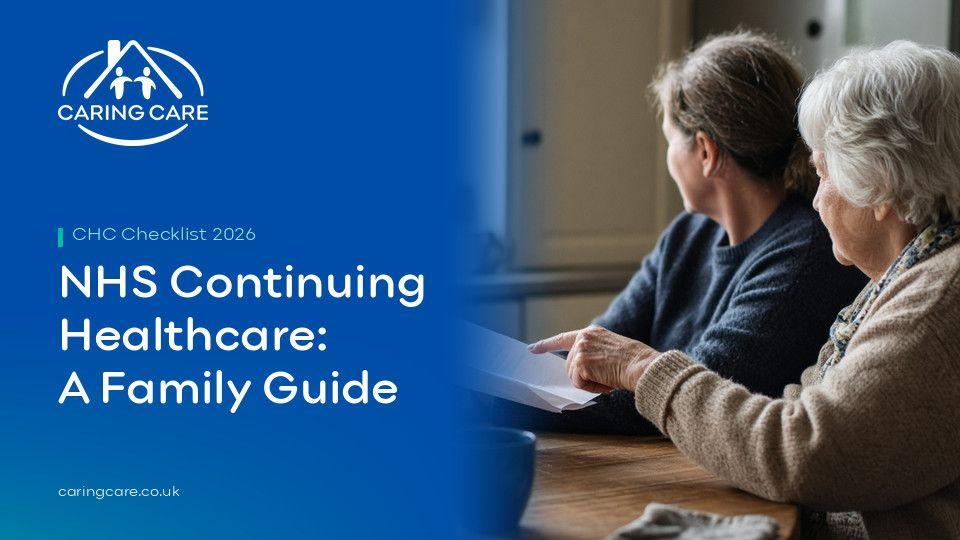
NHS Continuing Healthcare (CHC) Funding: A 2026 Family Guide
NHS Continuing Healthcare (CHC) is a package of ongoing care that the NHS arranges and pays for in full, for adults whose main need is a health need rather than a social care one. It can be provided in a care home or in the person's own home. It isn't means tested, so savings and the family house don't come into CHC funding decisions.
This guide covers how CHC works in Wolverhampton, Walsall, Birmingham, Dudley, Sandwell and Staffordshire: the CHC checklist, the full assessment, Fast Track for people nearing the end of life, getting CHC at home, reviews, appeals, and who to call locally.
The short answer
CHC is decided on needs, not diagnosis. A nurse, doctor or social worker usually starts with a short screening called the CHC checklist. If that's positive, a team of at least two professionals completes a full assessment using the Decision Support Tool, which scores 12 areas of need. Someone with a rapidly deteriorating condition who may be nearing the end of life can be fast tracked instead. If CHC funding is agreed, the NHS funds the whole package, at home or in a care home.
What is NHS Continuing Healthcare?
The National Framework for NHS Continuing Healthcare describes CHC as care "arranged and funded solely by the NHS" for someone aged 18 or over who has a "primary health need" arising from disability, accident or illness.
Integrated care boards (ICBs), the local NHS bodies that commission health services, run NHS CHC. They must assess someone if it looks like they may need it.
CHC covers all assessed health and associated social care needs. In a care home, that includes the accommodation. At home, it can include equipment, laundry, help with meals and shopping, and cover while a family carer has a break. It doesn't pay rent, food or normal household bills.
Families often hear about CHC late, around a hospital discharge or a sharp decline. You can ask the GP, district nurse or social worker for a checklist yourself.
What conditions qualify for continuing healthcare?
No condition qualifies on its own, and none rules a person out. The NHS is clear that eligibility "depends on your assessed needs, and not on any particular diagnosis or condition". Two people with the same diagnosis can get different answers.
Assessors look at the overall picture of need, under four headings:
- Nature: what kind of help is needed and how much skill it takes.
- Complexity: how needs interact and make each other harder to manage.
- Intensity: how severe the needs are and how often they need attention.
- Unpredictability: how much needs change without warning, and the risk if care isn't there at the right time.
In practice, people who qualify often have several things going on at once. Swallowing difficulty with a high choking risk. Pressure ulcers needing daily nursing. Seizures. Pain that isn't controlled. For more on how needs build up over time, read our guide to complex care at home in the West Midlands and our stages of dementia guide.
The CHC checklist: the first step
The checklist is a screening tool. It decides whether someone should go on to a full assessment. It doesn't decide eligibility. The Department of Health and Social Care updated the NHS continuing healthcare checklist and its guidance on 20 October 2026 for ease of use and clarity.
It should be done at the right time and place, once ongoing needs are clearer, and usually in the community rather than on a hospital ward. Expect one if someone needs a nursing home place or has significant support needs.
Each care domain is scored A (high need), B (moderate) or C (low). A full assessment is needed if any of these apply:
- 2 or more domains score A.
- 5 or more domains score B, or 1 scores A and 4 score B.
- An A in one of the domains that carry a priority level in the full assessment.
The threshold is set low on purpose, so anyone who might be eligible gets a full look. You should get notice, and you or a representative should normally be able to take part. You should also get a copy, with the reasons written down.
The ICB should normally decide eligibility within 28 days of receiving a completed checklist or a request for full assessment. If it takes longer without good reason and then finds the person eligible, it should refund care costs from day 29.
The full assessment and the 12 care domains
A multidisciplinary team completes the Decision Support Tool (DST). At minimum that's two professionals from different healthcare professions, or one health professional and one social care assessor. It should usually include both health and social care staff who know the person. The family's views should be taken into account. The framework says assessments should usually happen outside an acute hospital, so this often follows discharge.
The DST covers 12 care domains:
- Breathing
- Nutrition (food and drink)
- Continence
- Skin, including wounds and ulcers
- Mobility
- Communication
- Psychological and emotional needs
- Cognition (understanding)
- Behaviour
- Drug therapies and medication: symptom control
- Altered states of consciousness
- Other significant care needs
Each is rated no needs, low, moderate, high, severe or priority. Only breathing, behaviour, drug therapies and altered states of consciousness have a priority level. According to the NHS, one priority need or severe needs in two domains usually means someone is eligible. A severe need plus several others, or a number of high or moderate needs, can also qualify. The ICB makes the final decision.
Go in with evidence. For two weeks beforehand, write down every night waking, fall, choking episode and spell of distress. Bring care plans, consultant letters and carers' daily notes.
Fast Track CHC: NHS-Funded Palliative Care at the End of Life
If someone has a rapidly deteriorating condition that may be entering a terminal phase, a doctor or registered nurse responsible for their care can complete the Fast Track Pathway Tool. There's no checklist and no DST. The ICB must accept a properly completed Fast Track and act on it straight away, and the framework says the package should usually be in place within 48 hours.
Fast Track is how many families get NHS fast track palliative care at home for someone's last weeks. Ask the consultant, the GP or the hospice team, such as Compton Care in Wolverhampton, whether it applies. Our guides to palliative care at home and end-of-life care at home explain what that care looks like day to day.
Can you get continuing healthcare at home?
Yes. Once someone is eligible, the ICB agrees a care and support package with the family. It will listen to what you want. It can also weigh up value for money.
People eligible for CHC have had a legal right to a personal health budget since October 2014. The ICB can hold the budget, a third party can manage it, or it can be paid as a direct payment. A direct payment gives you the most say over who provides the care. You can't top up a CHC package privately. You can pay for extra services the assessment didn't cover, as long as they're provided separately.
At home, an NHS CHC package might mean regular visits, care after hospital discharge, 24-hour care, live-in care or palliative care, alongside district nurses.
How hard is it to get CHC, and who is unlikely to qualify?
CHC is hard to get. Many people have a positive checklist, but far fewer are found eligible after the full assessment. The bar is a primary health need, not simply a high level of care.
People are less likely to qualify when their needs are mainly about:
- Help with washing, dressing and eating
- Supervision or company for safety
- Mobility, without complex health risks
- A diagnosis that is stable and well managed
That doesn't mean it isn't worth asking. Needs change, and a checklist can be repeated. Keep notes of anything unpredictable or risky, such as choking, seizures, falls or behaviour that needs skilled handling.
If the answer is no: joint packages and council funding
A "no" to full CHC isn't always the end of NHS help. The NHS can pay for part of someone's care, with the council paying the rest. This is called a joint package. In a care home with nursing, someone who isn't eligible for CHC may get NHS-funded nursing care, a contribution the NHS pays towards the registered nursing part of the fees.
Anything left falls to the council, which carries out a Care Act needs assessment and a financial assessment. For 2026 to 2027, people in England with more than £23,250 in savings and assets normally fund their own care, according to the gov.uk charging circular. We don't publish a price list. Every family gets a written quote after a free care assessment.
Reviews at 3 and 12 months
CHC isn't for life. The ICB should review the package within 3 months of the decision, then at least once a year. The review checks that the care still meets the person's needs and that they're still eligible. If their health gets worse in between, ask for an early review rather than waiting.
How do you appeal a CHC decision?
The ICB must give written reasons and explain how to challenge them. The routes run in order:
- Local resolution. Ask the ICB to look again. This starts with a discussion and can go to a formal meeting. Each ICB publishes its own timescales, so check the decision letter and act quickly.
- Independent review. If you're still unhappy, apply to NHS England. You'll be asked to return its form within six weeks, and NHS England says the process typically takes three to six months.
- The Parliamentary and Health Service Ombudsman. After independent review, the Ombudsman can look at whether the process was fair.
Beacon gives free independent CHC advice on 0345 548 0300.
Who to speak to in the West Midlands
The ICB that decides is usually the one where the person's GP is registered.
- NHS Black Country ICB covers Dudley, Sandwell, Walsall and Wolverhampton, with CHC teams for each area.
- NHS Birmingham and Solihull ICB covers Birmingham. It now shares leadership with the Black Country ICB as a cluster, but the two remain separate bodies.
- NHS Staffordshire and Stoke-on-Trent ICB covers Staffordshire.
If the person is in New Cross, Manor Hospital, Russells Hall or Sandwell General, ask the discharge team whether a checklist has been done. Our hospital discharge guide covers that stage.
How Caring Care supports families through CHC
We provide care at home. We don't decide CHC, and we won't promise an outcome. What we try to make different:
- Small area teams, so the same one or two carers get to know your mum or dad.
- Clear daily notes that show what care involves. Families can use them as evidence.
- We'll tell you when needs have changed enough to ask for a checklist or an early review.
- Specialist care for dementia, Parkinson's, MS, stroke recovery and end of life.
- We work alongside district nurses, GPs and hospice teams.
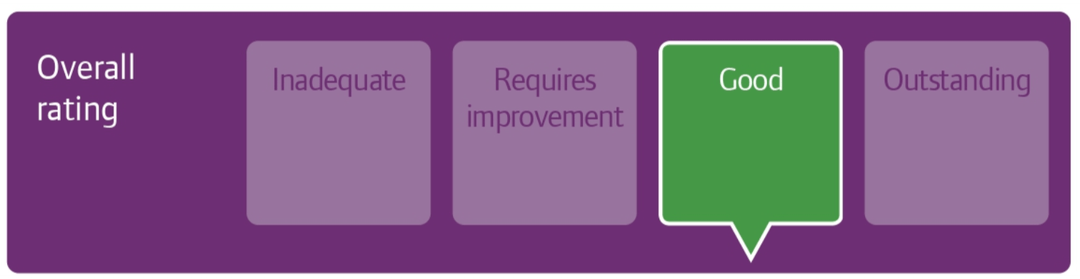
We've supported families across the West Midlands since 2008 and we're CQC-rated. To talk through care for someone who may qualify for CHC, call us on 0330 056 3111 or visit our Walsall home care page or Wolverhampton home care page and ask for a free care assessment.
Frequently asked questions
Is NHS Continuing Healthcare means tested? No. If someone qualifies, the NHS pays for the whole package, whatever their savings, income or property. Means testing only applies to council-funded care.
Can a GP do a CHC checklist? Yes. A GP can complete it, as can a nurse, social worker or other trained health or social care professional.
What score do you need on the CHC checklist? A full assessment follows if 2 or more domains score A, 5 or more score B, 1 scores A and 4 score B, or there's an A in a domain that carries a priority level. See the checklist section above.
What triggers a CHC assessment? Usually a hospital discharge, a move to a nursing home, or a clear decline in health at home. You can also ask for a checklist yourself.
Does dementia qualify for NHS Continuing Healthcare? A diagnosis of dementia alone doesn't qualify. Assessors look at needs, especially in the cognition, behaviour and psychological domains. Someone with advanced dementia and complex, unpredictable needs may qualify. Our guide to dementia care at home covers day-to-day support.
Who can fill in the CHC checklist? A nurse, doctor, other healthcare professional or social worker. You can ask the GP, district nurse, hospital discharge team or social worker to do one. You should get a copy with the reasons written down.
How long does a CHC decision take? The ICB should normally decide within 28 days of getting a completed checklist or a request for full assessment. Fast Track packages should usually be in place within 48 hours.
Can CHC be paid for care at home? Yes. CHC can fund care in someone's own home. People who qualify have a right to a personal health budget, which can be a direct payment, giving the family more choice over the provider.
What happens if CHC is refused? Ask the ICB for local resolution first, then apply to NHS England for an independent review. The NHS may still fund part of the care through a joint package, and the council can assess for the rest.
Useful external resources
- NHS: NHS continuing healthcare, eligibility, assessments and reviews
- GOV.UK: National Framework for NHS Continuing Healthcare and NHS-funded Nursing Care
- GOV.UK: NHS continuing healthcare checklist (updated October 2026)
- Black Country ICB: continuing healthcare contacts
- Staffordshire and Stoke-on-Trent: continuing healthcare
News
Our Latest News
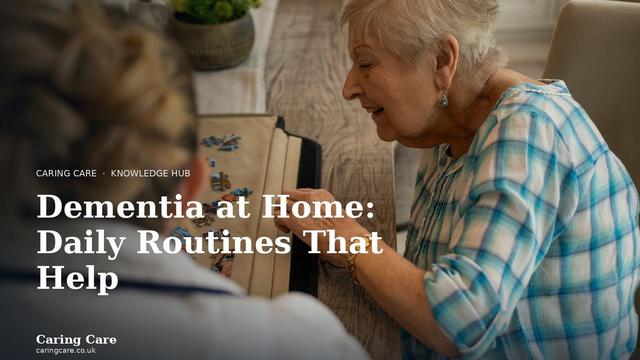
Practical dementia routines: morning, mealtimes, afternoon, sundowning, bedtime, communication and personal care. What works, what to avoid, and when to ask for help.
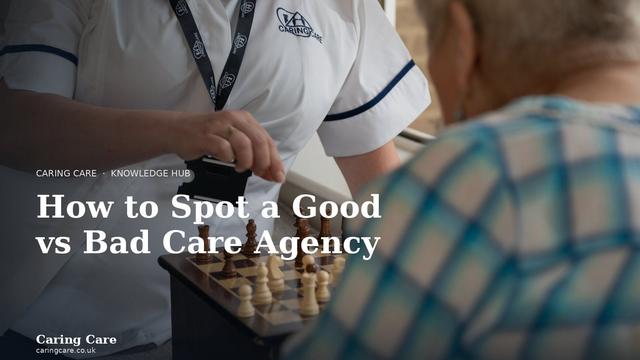
What separates a good care agency from a bad one: CQC rating, employment model, continuity of carer, care plan quality, and how fast they respond to concerns.

GET IN TOUCH
Caring Care
Units 4 & 5, Hatherton Court,22 Hatherton Street, Walsall, WS4 2LA
Tel: 0330 056 3111
Email: info@caringcare.co.uk


Copyright ©️ 2024 Caring Care LTD. All Rights Reserved.