News
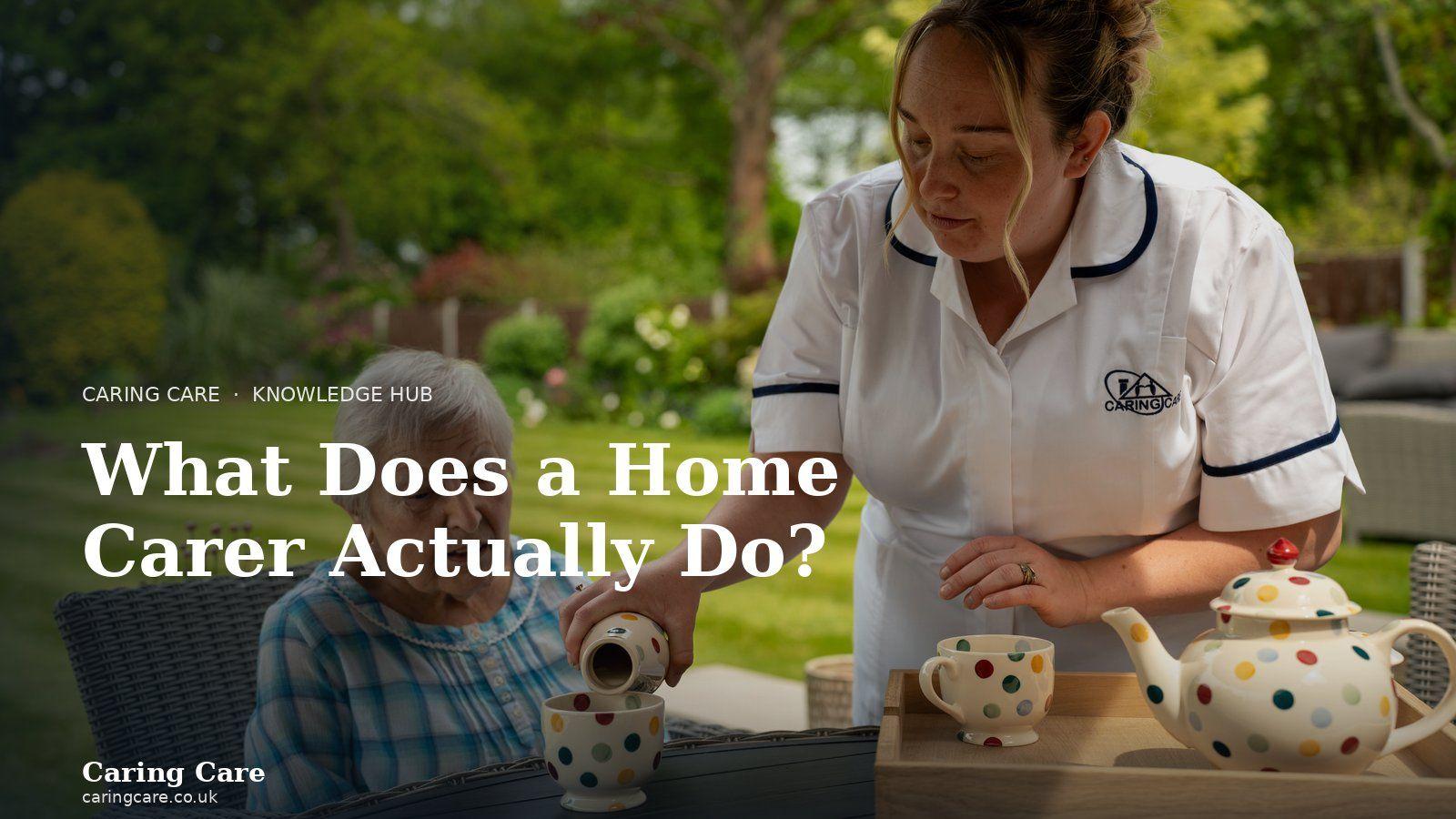
What Does a Home Carer Actually Do? A 2026 Family Guide
A home carer visits someone in their own home and helps them do the things daily life needs doing. That ranges from a 30-minute medication prompt first thing in the morning to a live-in carer who stays with someone through the full week.
For families new to the idea, the role can sound either vague or scary. This guide covers what a home carer actually does across a typical day, what they don't do, how one visit differs from the next, and how to tell if the carer you're meeting is the right fit.
The short answer
A home carer helps someone live safely and comfortably at home when they can't fully manage alone. That usually covers personal care (washing, dressing, help with the bathroom), medication prompts, meals and drinks, light housework, companionship, and support getting around the house or out of it.
What a home carer doesn't do: diagnose medical conditions, give injections unless specifically trained for the person's medication, change wound dressings a nurse should handle, or make legal and financial decisions on the person's behalf. For those, you need a district nurse, GP, pharmacist, or a legal power of attorney.
A typical morning visit
Most home care packages start with a morning visit. For a 45-minute visit for someone living with early-stage dementia and reduced mobility, here's roughly what happens:
- Arrive on time, greet the person by name, say hello to anyone else at home
- Check the person is comfortable and has slept okay (watch for signs of distress or confusion)
- Help with getting up from bed if needed
- Help with washing (either a strip wash at the sink, or support with a shower or bath depending on mobility)
- Help with dressing in the person's chosen clothes
- Hair, shaving, oral care, applying any prescribed creams
- Help the person into the kitchen or sitting room
- Prepare breakfast and a drink
- Prompt or administer morning medications per the Medication Administration Record
- Note anything unusual (pain, skin changes, mood changes, sleep issues)
- Write up the visit in the care plan (either on paper or in the care management app)
- Tidy up, wash dishes, say goodbye
That's one visit, one morning. The pattern changes by person, by day, by condition.
A typical lunchtime visit
A midday visit might be 30 minutes:
- Prepare and serve lunch
- Prompt lunchtime medication
- Help with toileting
- Short walk around the house or garden if mobility allows
- Check the person has a drink to hand for the afternoon
- Quick wellness check
A typical teatime visit
Teatime visit, 45 minutes:
- Prepare evening meal
- Prompt or administer teatime medications
- Help with washing or freshening up before evening
- Support with any evening hobby (TV programme the person likes, phone call to family, puzzle, reading)
- Note anything from the day in the care record
A typical bedtime visit
Bedtime visit, usually 30 minutes:
- Help the person get ready for bed
- Pyjamas, oral care, continence support
- Night-time medications
- Make sure call bell or phone is in reach
- Settle the person safely in bed
- Lock up on the way out if needed
That's four visits in a day for someone with reasonable needs. Simpler packages might be one morning visit. More complex ones might be six or more visits, or 24-hour live-in care.
What live-in care looks like
Live-in care is different from visiting. A live-in carer lives in the person's home for a stretch (typically 1-2 weeks before being relieved by a second carer), and provides support through the day and evening with reasonable breaks and sleep at night.
A live-in carer's day:
- Up before the client, prepares breakfast, morning medication
- Supports personal care at the client's own pace
- Through the morning: companionship, household tasks, help with hobbies
- Lunch and medication
- Afternoon activities, outings if wanted
- Evening meal, medications, settling for bed
- Breaks and personal time when the client is settled
Live-in suits people who need supervision rather than clock-based visits. Early to mid-stage dementia, Parkinson's, MS, recovery from stroke, and someone who's bereaved and struggling to keep routines going are common fits. For more detail, see our cost of home care guide for Wolverhampton and the cost guide for Walsall which cover when live-in becomes a sensible choice.
What home carers notice (and why it matters)
Good carers notice things family might miss, because they see the person on days family don't visit. The useful things carers often spot:
- Early signs of a urinary tract infection (confusion, agitation, smell of urine changes)
- Chest infection signs (new cough, breathlessness, change in colour)
- Pressure area concerns (redness that doesn't fade when pressed)
- Mood changes that might signal depression or dementia progression
- Falls or near-falls (even ones the person doesn't mention)
- Medication side effects
- Loneliness that's starting to affect the person's wellbeing
Carers who flag these quickly, to the GP, district nurse, or family, prevent hospital admissions. This is one of the clearest signals of a good care provider: they don't just do tasks, they watch and report.
What home carers can't do
Clear boundaries matter. Home carers don't:
- Prescribe or change medications (that's the GP or pharmacist)
- Give injections unless they're trained specifically for the client's medication
- Perform medical procedures that need a nurse (wound dressings, catheter changes, PEG feeds)
- Make decisions on the client's behalf without a power of attorney
- Handle money or sign documents on the client's behalf (safeguarding reasons)
- Transport the client in their own car unless the provider is set up for it with insurance
For medical tasks beyond a carer's remit, the district nurse team covers community nursing. GPs do home visits in some circumstances. Our hospital discharge to home care guide covers how carers coordinate with the medical team.
How carers are trained
In the UK, home carers complete the Care Certificate (15 standards covering communication, safeguarding, infection control, moving and handling, basic nutrition, and more) within their first 12 weeks. Beyond that, training varies by provider:
- Dementia-specific training (Tier 1 or Tier 2 awareness, sometimes Tier 3 for specialist roles)
- Condition-specific training (Parkinson's, MS, stroke, autism, learning disability)
- Medication administration (NVQ Level 2 or equivalent)
- Moving and handling (practical training with equipment)
- End-of-life care
- Mental Capacity Act and safeguarding
- First aid
Ask any provider about their training programme and how often it's refreshed. Good providers invest in ongoing training. Average providers do the Care Certificate and leave it there.
What makes a carer good at the job
Technical training matters. So does personality. The best home carers tend to share these traits:
- Punctual and reliable
- Patient (rushing never helps anyone)
- Honest about what they can and can't do
- Discreet (they see the person at their most private, and talk about them accordingly)
- Observant without being nosy
- Kind without being patronising
- Comfortable with the full range of personal care tasks
- Able to have a conversation with someone very different from them
- Takes safeguarding seriously
- Flags concerns quickly rather than leaving them
Many home carers do the job for decades. The ones who do are usually the ones who care about the person as a person, not just the task list.
How Caring Care works
We provide home care across Wolverhampton, Walsall, Birmingham, Dudley, Sandwell and Staffordshire. Our carers:
- Are directly employed (not agency), which supports consistency
- Work in small area teams, so the same one or two carers see each client
- Complete the Care Certificate as standard, plus condition-specific training based on the clients they support
- Flag health changes direct to GPs, district nurses, and family
- Follow written care plans that we review every 3 months, or sooner if needs change
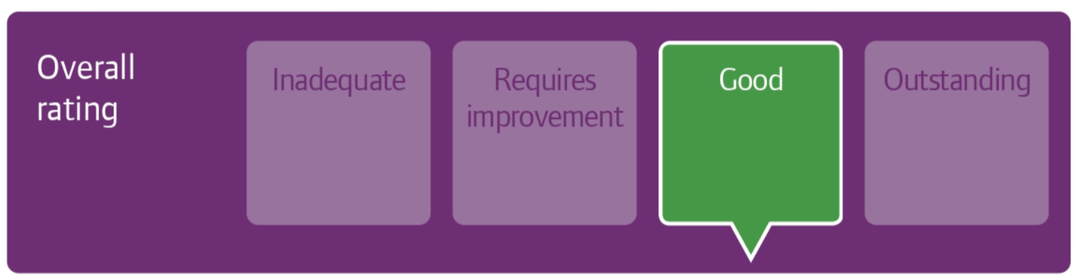
We're CQC-rated and have been supporting West Midlands families since 2018. For an honest conversation about what home care might look like in your situation, call us on 0330 056 3111 or visit our domiciliary care page.
Frequently asked questions
How long is a typical home care visit? Visits range from 30 minutes to over an hour. 30 minutes is often the minimum (shorter calls don't cover travel time properly). 45-minute morning visits are common. Live-in care covers the full day.
Will the same carer visit every time? With a good provider, yes, you get the same one or two carers most of the time. Some rotation is unavoidable for holidays and sickness, but the pattern should be consistent, not random. If you're seeing different faces every visit, that's a provider problem.
Can we have a female-only carer or a male-only carer? Yes. Any good provider respects client preferences on gender of carer. If this matters to the family or the client, say so at the start.
What happens if the carer finds something wrong? Depends on the issue. For medical concerns, the carer rings the GP or district nurse and tells the family. For safety concerns, the carer calls the care manager who follows safeguarding procedures. For urgent issues (fall with injury, suspected stroke), the carer calls 999 and stays with the person.
How much does a home care visit cost? Costs vary between providers and by care type (hourly, live-in, 24-hour, overnight). We give a written quote to each family after a free care assessment. See our cost guides for Wolverhampton and Walsall for a sense of the price drivers, or check Homecare.co.uk's annual pricing survey for sector-wide ranges.
Useful external resources
News
Our Latest News
MS home care in the West Midlands: fatigue-aware carers, specialist nurse links, funding routes and what the care package looks like as MS progresses.
Home care for autistic adults and children in the West Midlands: sensory-aware carers, funding routes, and local autism services worth knowing about.


GET IN TOUCH
Caring Care
Units 4 & 5, Hatherton Court,22 Hatherton Street, Walsall, WS4 2LA
Tel: 0330 056 3111
Email: info@caringcare.co.uk


Copyright ©️ 2024 Caring Care LTD. All Rights Reserved.