News
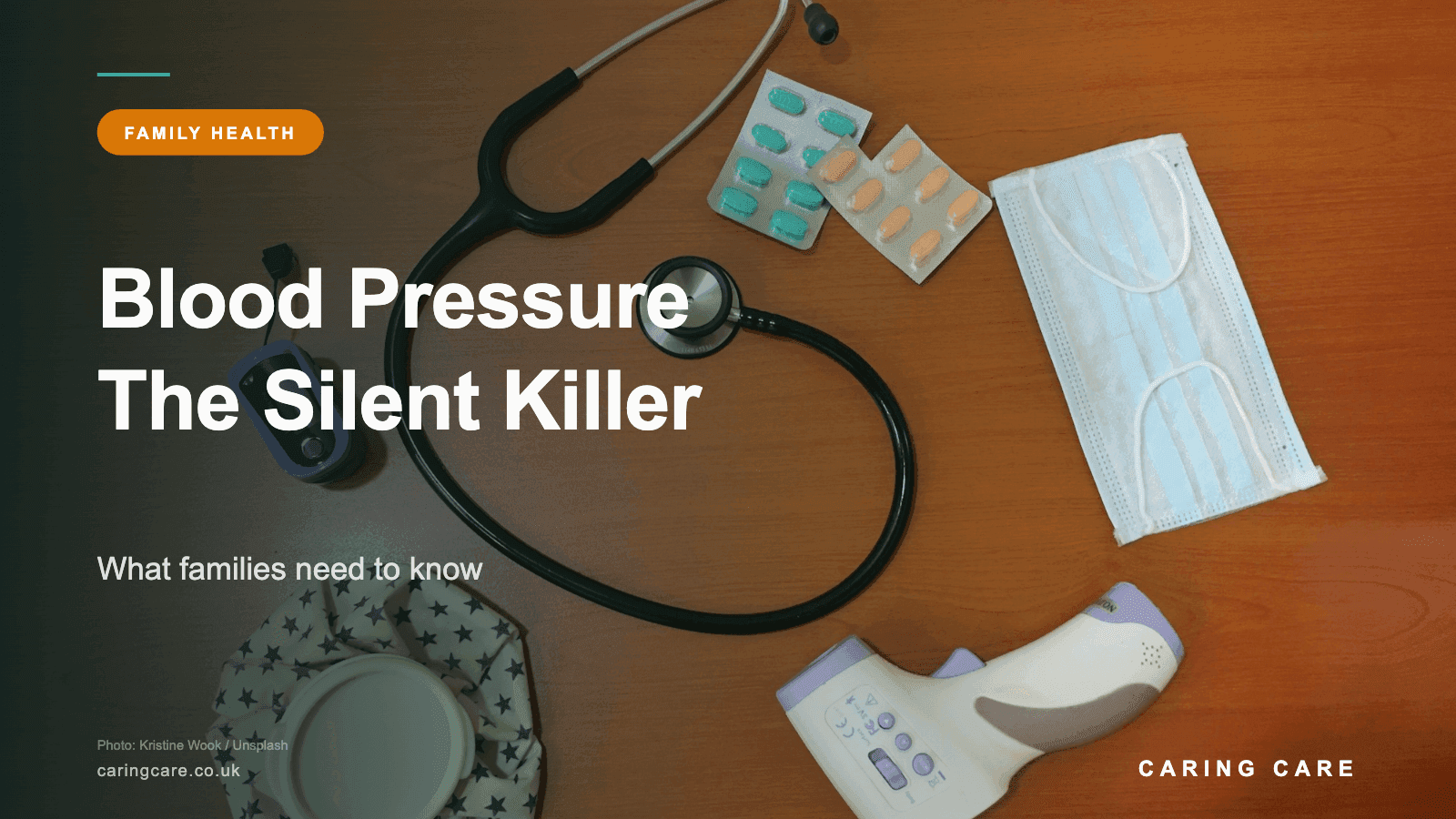
The Silent Killer: Why a Blood Pressure Check Belongs in Every Family's Routine
When adult children think about their parents' health, blood pressure rarely makes the list. It usually doesn't make the list at all.
And yet it affects nearly a third of UK adults, often shows no symptoms whatsoever, and is one of the biggest risk factors for heart attack and stroke. Doctors call it "the silent killer" for good reason.
This guide is about why blood pressure matters, what good monitoring looks like for an older relative, and how home care can fold it into the rhythm of an ordinary day.
Why blood pressure deserves attention
You almost never feel high blood pressure. There's no headache, no chest pain, no ache asking for attention. It rises steadily, sometimes for years, giving nothing away. By the time it does, the damage to the heart, brain or kidneys may already be underway.
The fix isn't complicated. Regular monitoring catches the problem early. Lifestyle changes help: a bit more movement, a bit less salt, sleep, less stress. For many people, medication is straightforward and well tolerated.
The harder bit, especially for older adults living alone, is the "regular" part. A blood pressure check isn't a task most people remember to do without prompting. It tends to happen at the GP, once a year if you're lucky, less often if not. That's rarely enough to spot a trend.
What good home monitoring looks like
A few things make a real difference for families looking after a parent or grandparent.
Own a home monitor. Decent automatic blood pressure monitors cost under £30. They're easy to use, accurate enough for everyday tracking. Most pharmacies will calibrate it against the in-store machine if you ask.
Build a consistent routine. Blood pressure shifts through the day, so one reading on its own doesn't tell you much. Aim for the same time each morning. Before tea or coffee. Sitting still for five minutes first. Write the reading down. Patterns matter more than single numbers.
Know the right target to compare against. For most adults that's below 140/90 mmHg. For some, the GP will set a slightly different goal. Knowing the right target stops the daily reading from being just a number on a screen.
Know when to act. A single high reading isn't a panic. A run of readings consistently above the target, or a sudden change, is worth a GP call.
Hydration, sleep, salt, movement. No one of these is a magic answer. Taken together they do most of the work.
Where home care fits in
For people receiving regular care at home, monitoring blood pressure becomes a useful thread of a visit. A morning carer is well placed to ask "shall we take your reading while the kettle boils?", and to log what the monitor says.
That kind of light-touch monitoring does several things at once.
It catches concerns early. A carer who has visited the same person for months notices when readings start drifting up. The family hears about it. The GP can get involved before anything bigger.
Habits build naturally too. Hydration prompts. A short walk if mobility allows. A sensible meal at the same time each day. The basics of heart health and the basics of good home care are mostly the same basics.
It takes weight off the family. Adult children who live further away often worry about whether the person they love is keeping an eye on their numbers. A regular carer is a pair of eyes on the things that matter.
And it guards against medication mishaps. People taking blood pressure tablets occasionally forget a dose, or double up. A carer in the daily routine helps prevent both.
What to ask your GP
If you're worried about a relative's blood pressure, a few questions are worth bringing to the appointment.
What's the right target for them? Many older adults have a slightly higher acceptable range than younger adults. Knowing the right number for the right person stops unnecessary worry.
Should home monitoring be added to their care plan? If yes, ask what frequency the GP wants and how to report readings.
Are any of their medications likely to affect blood pressure? Some painkillers, decongestants and supplements push readings up. The GP or pharmacist can advise.
Is there a "when to call" threshold? Knowing the reading above which the GP wants to hear about it gives the family, and any carer involved, a clear cue.
A small gesture, a big impact
Telling an older relative they matter takes many forms. A regular phone call. Showing up on a Sunday. Sitting with them for an hour while the kettle boils. So does a five-minute conversation about whether mum or dad has been checking their blood pressure, and offering to help if not.
If you're looking for support around medication, monitoring or general wellbeing for an older relative at home, we'd be glad to have a no-pressure conversation. Our home care team across Wolverhampton, Walsall and the wider West Midlands works alongside families every day to make sure the heart-health basics don't get lost in the noise.
A home blood pressure monitor costs under £30. It might be the most useful thing you can put in an older relative's house this year.
Caring Care | Trust. Professionalism. Compassion. Visit caringcare.co.uk · Email info@caringcare.co.uk · Call 0330 056 3111
News
Our Latest News
Stroke recovery at home in the West Midlands: how Early Supported Discharge works, funding, and how good home care supports rehabilitation.
End-of-life care at home in the West Midlands: Fast Track NHS CHC funding, hospice-at-home services, what to expect in the last weeks, and bereavement support.


GET IN TOUCH
Caring Care
Units 4 & 5, Hatherton Court,22 Hatherton Street, Walsall, WS4 2LA
Tel: 0330 056 3111
Email: info@caringcare.co.uk


Copyright ©️ 2024 Caring Care LTD. All Rights Reserved.