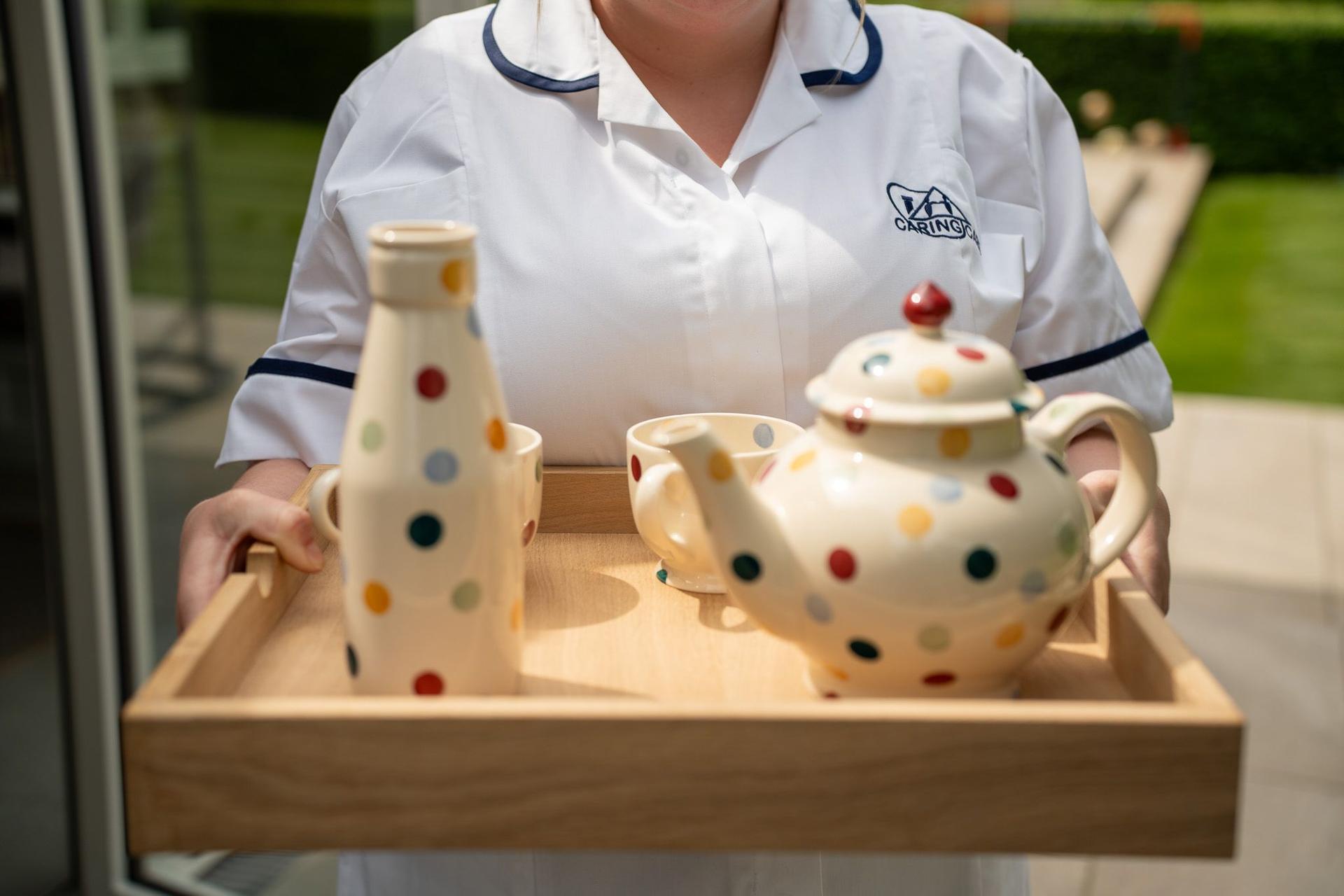
Sometimes It's the Smallest Gestures That Make the Biggest Difference
You won't find this written on a care plan, because it doesn't fit into a box. It is the thing every long-serving carer at Caring Care will tell you, and it is the thing families discover, sometimes, only after their loved one has been with us for a while.
The biggest moments in home care are not the big moments. They are the small ones.
A cup of tea made the way she likes it. A reassuring presence on a difficult morning. Noticing she is a little quieter than usual and gently asking why. Adjusting the cushion behind the chair without being asked. Pausing the busyness of the visit to actually listen to the story she started telling last week.
These are not the things you hire a carer for, on paper. On paper, you hire a carer for personal care, medication prompts, meal preparation, mobility support. Those things matter and they have to happen well. But the difference between a visit that meets the brief and a visit that genuinely supports someone is almost always in the small gestures around the edges.
Why the small things land so hard
For someone living alone, especially someone in their eighties or nineties, the texture of the day is different from the rest of us. The phone rings less. The post is thinner than it was. The afternoons can be long. A carer arriving at 8am is the first face of the day. A carer at lunchtime is sometimes the only conversation between breakfast and the evening. These visits are not just functional. They are the rhythm.
When a carer takes the time to notice — to ask about the photo on the mantelpiece, to remember which grandchild had the exam coming up, to comment that she has had her hair done — they are doing more than being polite. They are confirming something important. You are still here. I see you. The things you care about still matter.
That is hard to put on a job description. But it is the difference between care that supports a person and care that just gets through a list.
What the smallest gestures look like in practice
Here is the everyday inventory of small things our carers tell us make the biggest difference. None of these will surprise anyone who has cared for an elderly relative themselves. All of them are easy to overlook in a busy schedule.
Arriving on time. When you have spent the morning waiting, "on time" feels like respect.
Saying hello properly. Stopping at the door to actually greet the person, by name, eye to eye, before launching into the visit's tasks.
Remembering small things. "How did your grandson's parents' evening go?" is, in some weeks, the most important question anyone will be asked.
Doing one small thing without being asked. Watering the plant on the kitchen windowsill. Bringing in the post. Putting away the dish that someone left next to the sink. None of these is in the plan. All of them say "I noticed".
Sitting down for a minute. Care work has a tendency to be performed standing up. A carer who sits down, even briefly, signals that the conversation is welcome.
Saying goodbye warmly. Not just clicking out of the system but giving a proper farewell.
Following up the next day. "I was thinking about what you said yesterday — how is that today?" rarely fails to land.
The cumulative effect of these moments over weeks and months is what makes care feel like care, rather than service delivery.
Why we look for this in the people we hire
Caring Care has, deliberately, built a recruitment process that takes warmth seriously. We can train people in moving and handling, medication administration, safeguarding, dementia awareness, end-of-life support. We cannot easily train someone to notice a quiet day in someone else's face.
When we interview, we ask questions designed to listen for the small things. How did they leave their last role? Did they speak about the people they cared for as individuals, or as cases? Did they remember names and stories, or just tasks? The answers tell us a great deal about how their visits will feel inside someone's home.
We protect this in our training too. New carers are paired with experienced ones, shadowing visits and learning what good looks like in real time. We talk openly about communication — eye contact, posture, how to walk into a room, how to leave it. We talk about pace. Care that is rushed is care that misses the small things.
When the small things are not optional
For some of the families we work with, the small gestures are not nice-to-haves — they are the entire reason home care is the right answer.
Take respite care. When a family member has been the main carer for a long time, the relationship has often become quietly stretched. Tasks have piled up. Conversations have started revolving around what needs doing. Hiring respite support is not just about giving the family carer time off. It is about restoring the bandwidth for the relationship to feel like a relationship again. The carer steps in, the routine continues, and the family member gets back the energy to be a daughter or son or partner — not just a caregiver.
That can only happen if the respite carer is good at the small things. Otherwise the family carer just inherits a new problem to manage.
If you are considering support at home
If you are reading this and thinking about whether home care could help in your family, we would love to have a conversation. There is no commitment, no sales pressure. Just an honest chat about what life looks like at the moment and what might make it gentler.
We support people across Wolverhampton, Walsall and the wider West Midlands. We build packages around the person — light or comprehensive, short-term or long-term. And we look for carers who notice the small things, because those small things are the whole point.
Sometimes it really is the smallest gestures that make the biggest difference.
Caring Care | Trust. Professionalism. Compassion. Visit caringcare.co.uk · Email info@caringcare.co.uk · Call 0330 056 3111
BLOGS
Our Latest Blogs

We've Been Named a Top 20 Small Home Care Group for 2026
Caring Care has been named a Top 20 UK Small Home Care Group for 2026 by homecare.co.uk. The ranking is decided by verified reviews from real families we support. Here's what it means for anyone considering home care in the West Midlands.
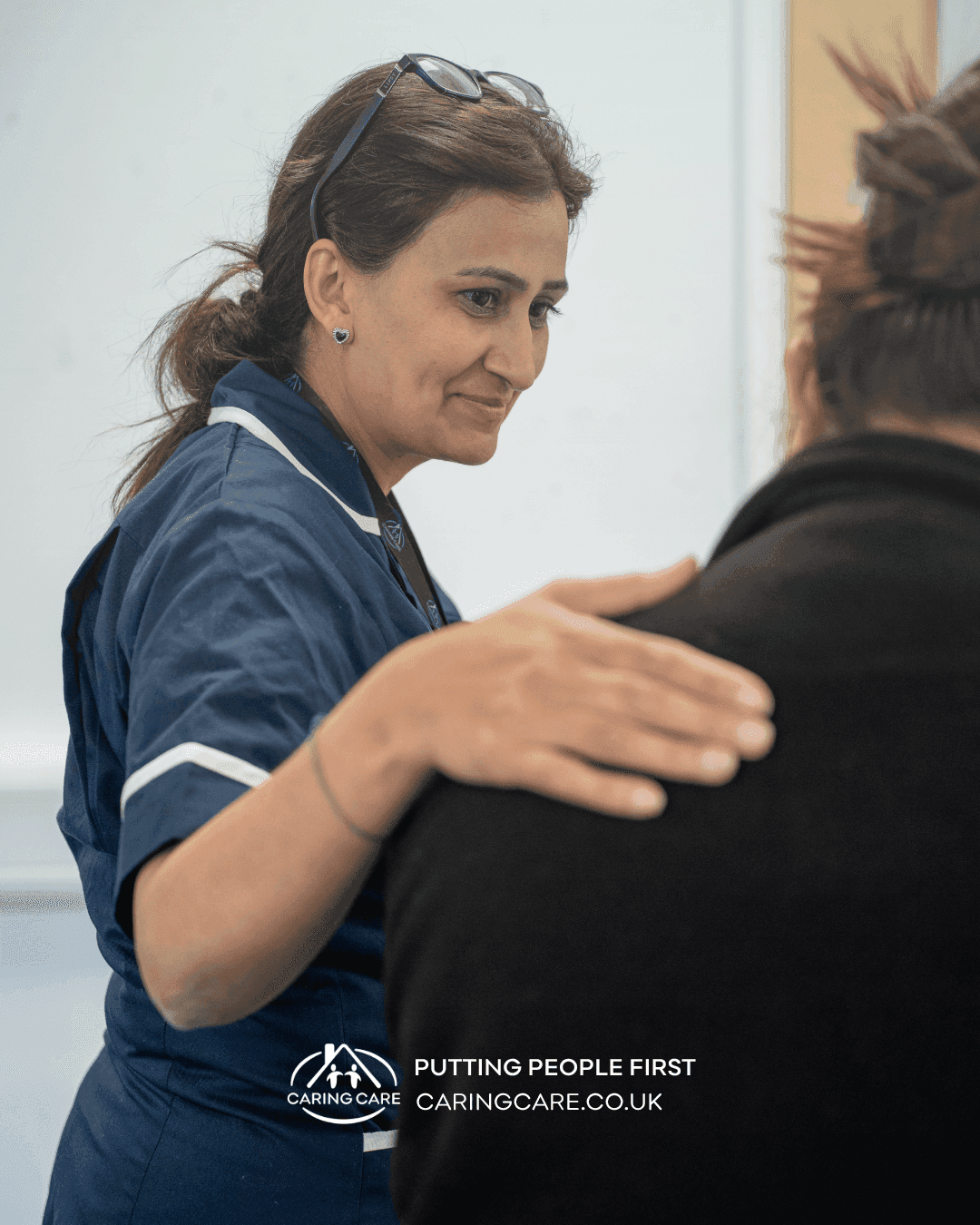
Behind Every Care Visit: Meet the Team Making Caring Care Run
A look at the carers, office team, supervisors, trainers and managers behind every Caring Care visit — and an invitation to families and would-be carers in the West Midlands.

Donating Easter Eggs to Well Wishers, the Charity Behind Walsall NHS Trust
This Easter, Caring Care donated Easter eggs to Well Wishers, the official charity of Walsall NHS Trust — and a quick look at why we keep showing up for our local community.